Category Archives: Software Architecture
Learn software architecture the way it is practised on real projects: as a set of decisions driven by requirements. This category starts from the inputs — lean requirements, personas, scenarios, and a domain model derived from them — and moves to the patterns that turn those decisions into code: layered, hexagonal, clean, and event-driven architectures, and the pragmatic hybrids that real systems end up with. Every article uses working Python projects such as FastURL, so you can see how each pattern shapes folders, dependencies, and tests rather than only diagrams.
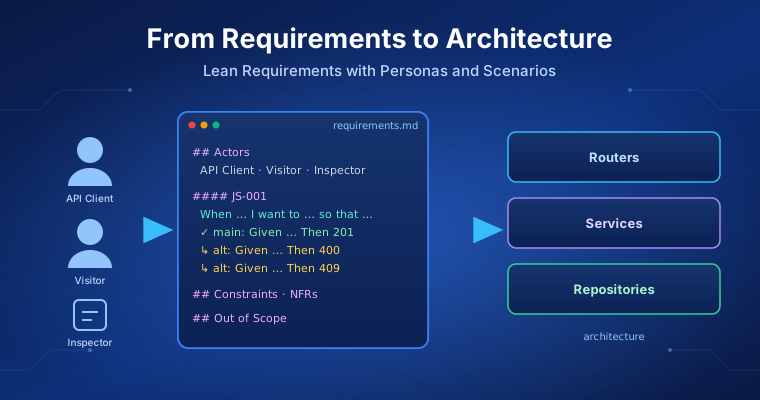
Requirements without the paperwork: actors, main and alternative scenarios, and acceptance criteria in one Markdown file that stays in sync with the code.
Continue Reading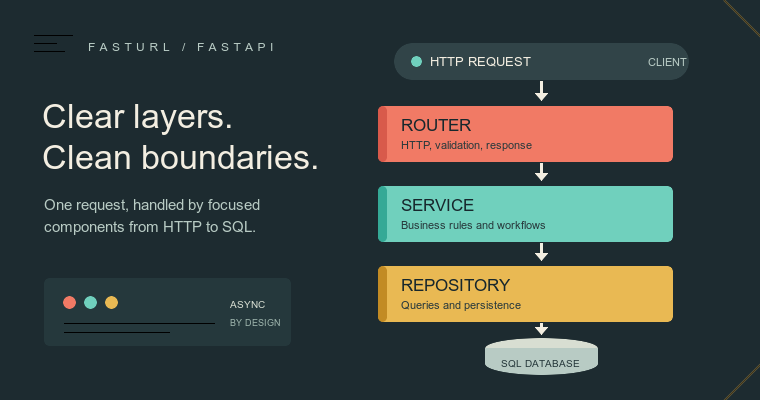
Learn how to structure a production-ready FastAPI project using a layered architecture: Routers, Services, Repositories, and Dependency Injection.
Continue Reading